I’ve heard genealogists utter frustrations as “like unraveling a pile of spaghetti”, or “I need a blackboard” to map out these trails of deeds…
I, like most other folks, would compile notes and deed abstracts and other clues and arrange them in as best a timeline as I could muster… then just get hopelessly overwhelmed… and giving up, “brickwalled” as they say.
I could not grasp “a big picture” to focus on. Then I ran across this little graphic…
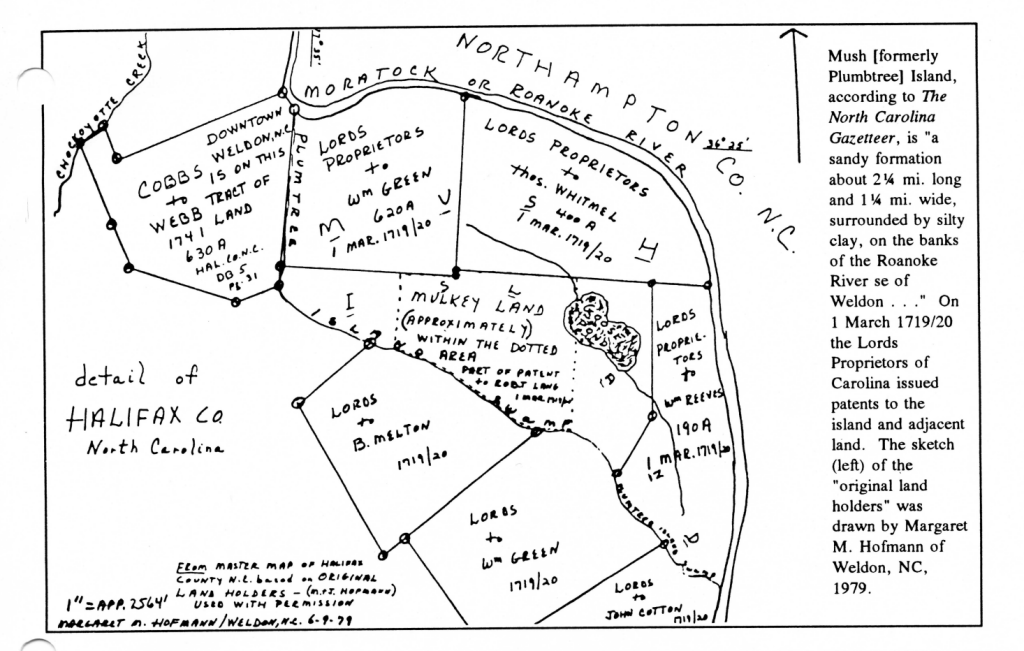
It was produced by Margaret Hofmann in 1979. It can be found on the last page here: https://www.therainwatercollection.com/reference/ref1508.pdf
Then I started mapping… seemed a reasonable thing to do.
Gestalt psychology is a school of thought from the early 20th century (mainly developed by German psychologists like Max Wertheimer, Wolfgang Köhler, and Kurt Koffka) that says we experience and perceive things as complete wholes rather than just a bunch of separate pieces.The core idea is captured in the famous phrase: “The whole is greater than the sum of its parts.” Instead of our brain adding up individual sensations (like tiny dots of color or sounds) to understand something, we naturally see organized patterns, forms, or meaningful structures right away. For example:
- When you look at a face, you instantly recognize “a friend’s face” — not just eyes + nose + mouth added together.
- You see a melody as a complete tune, even if the notes change key or instrument — the overall pattern stays the same.
- In simple terms: Our minds are wired to make sense of the world by seeing meaningful patterns and wholes first — it’s efficient and helps us quickly understand complex scenes, designs, art, or even problems — rather than analyzing every tiny detail separately.
In other words, a picture IS worth a thousand words.
Margaret Hofmann’s little “detail of Halifax County” map led me to create this:
And that Study led me to the Southside Map…
 Colonial Southside Virginia... a Blog and Maps
Leave a comment